LARO
Info
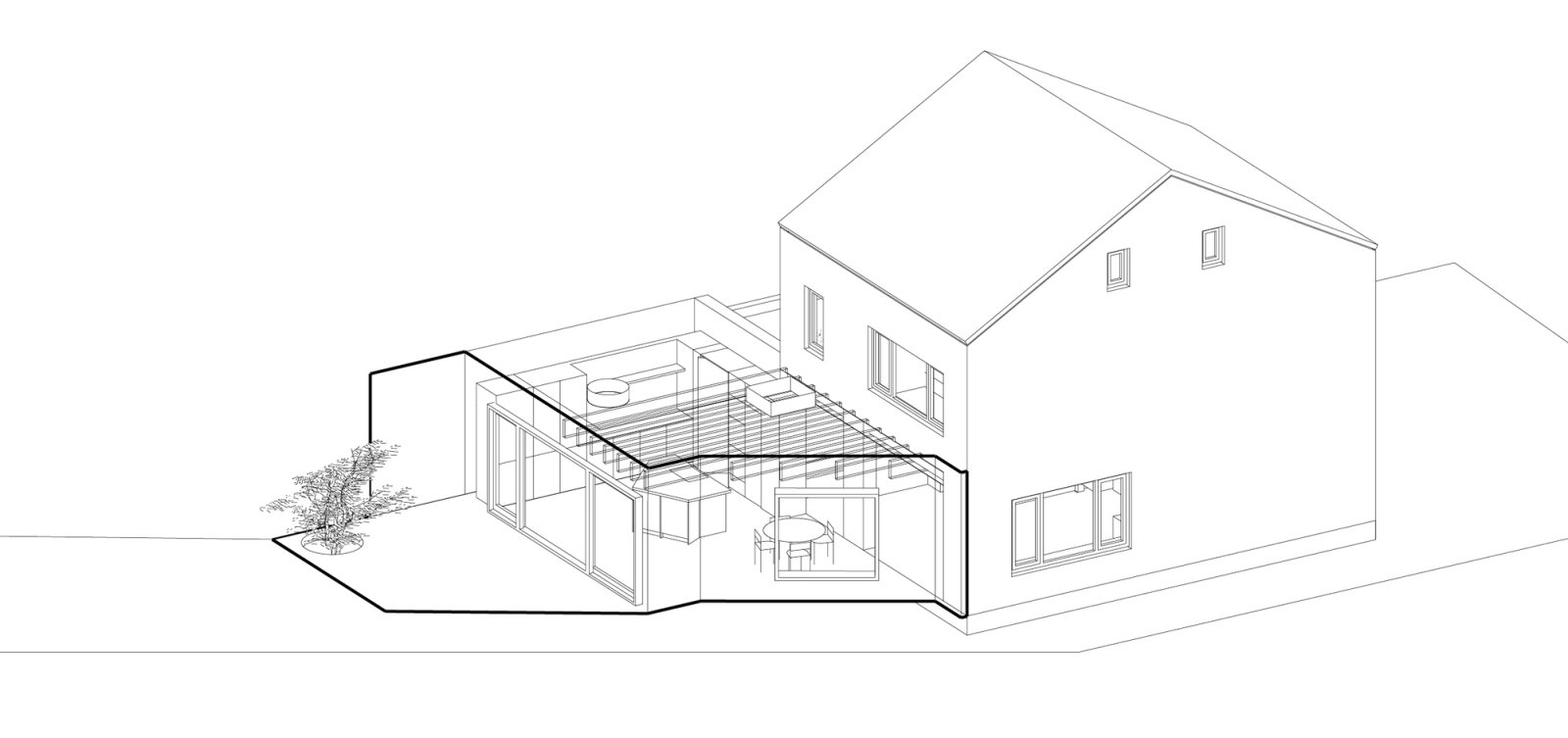
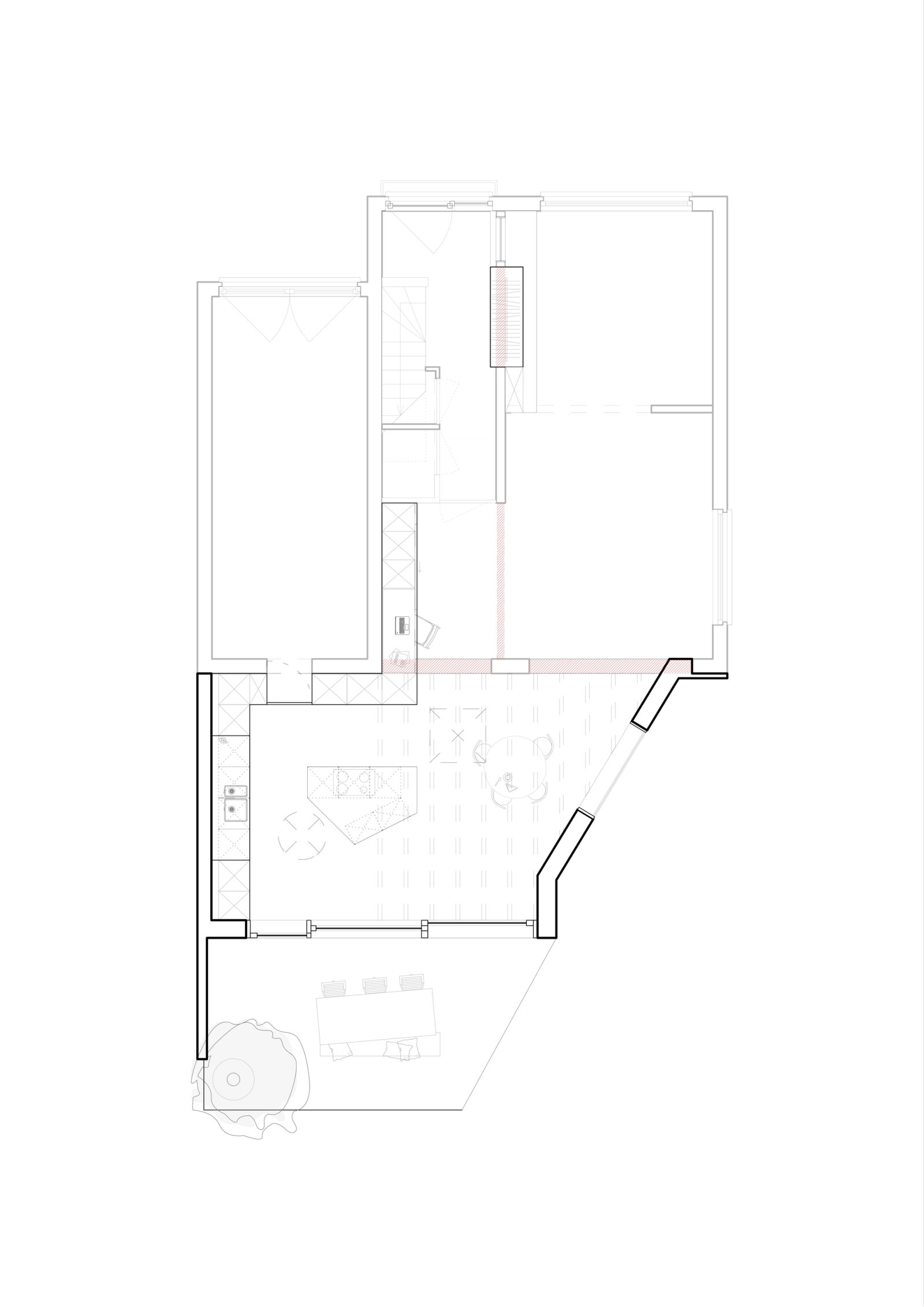
At the heart of this renovation is a new extension defined by a deliberate duality. In strong contrast to the original geometry of the house, the extension adopts a distinct form shaped by the irregular boundaries of the site itself. The resulting volume responds directly to the plot’s angular conditions, creating a contemporary counterpart to the existing structure.
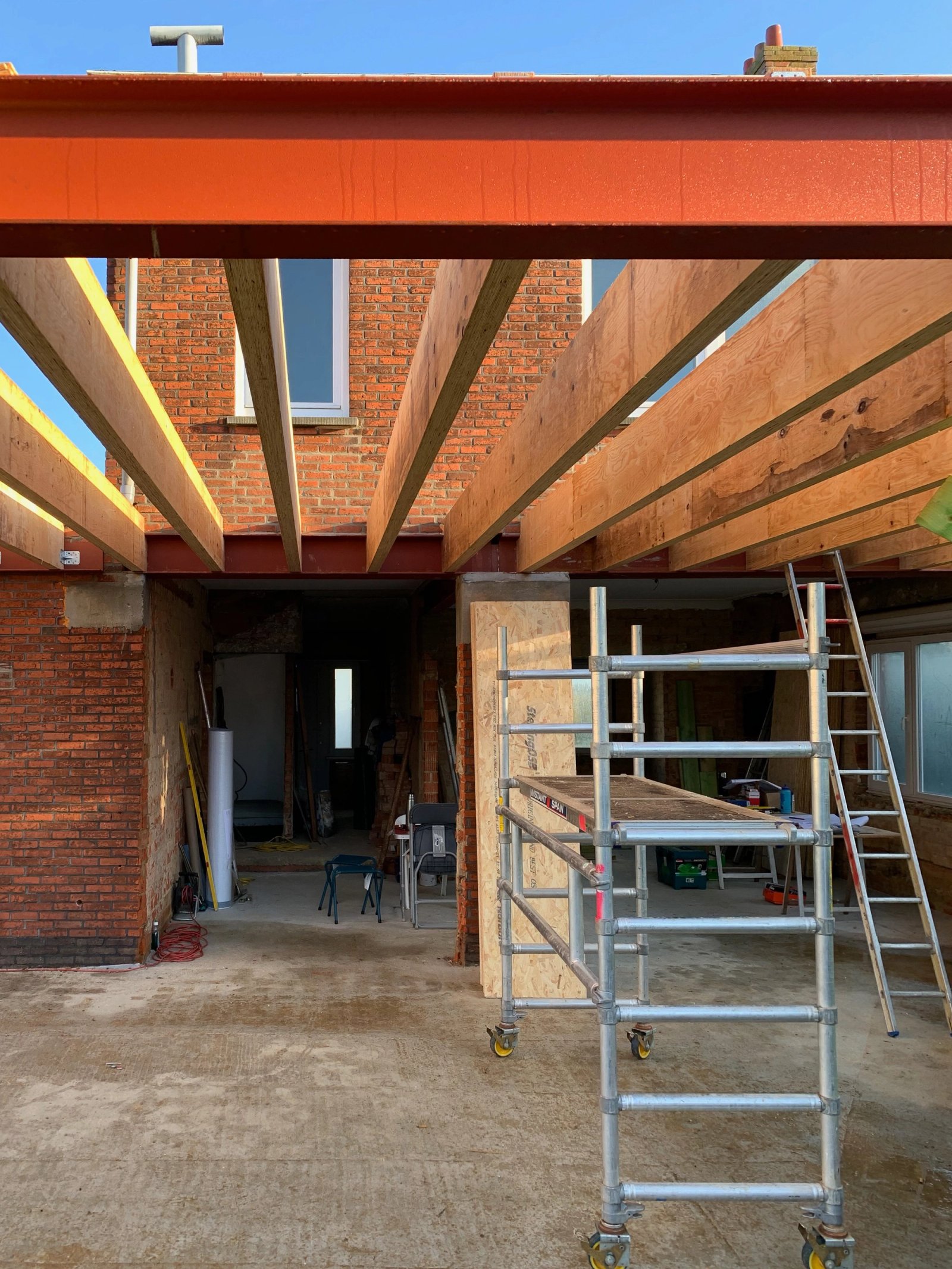
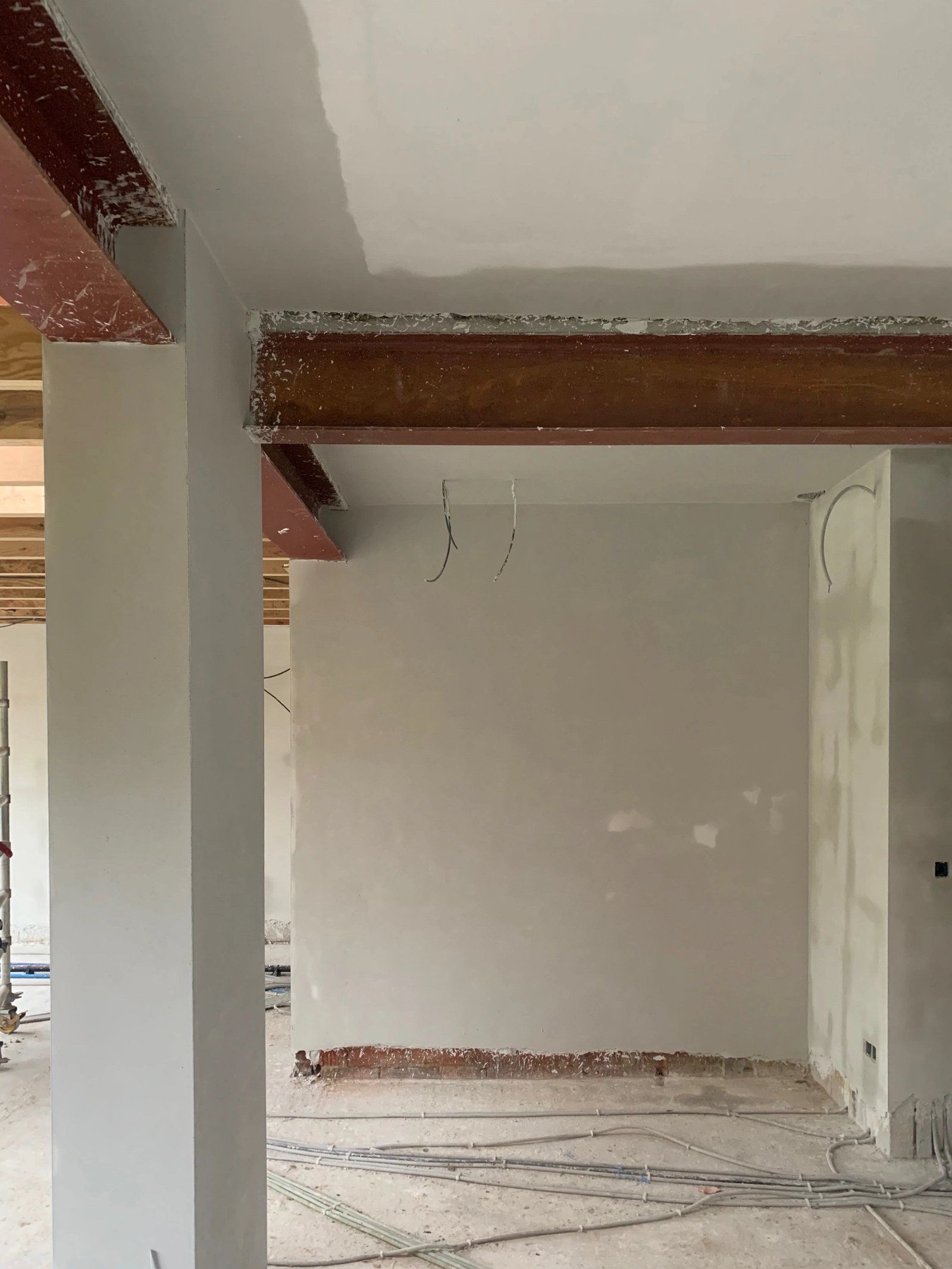
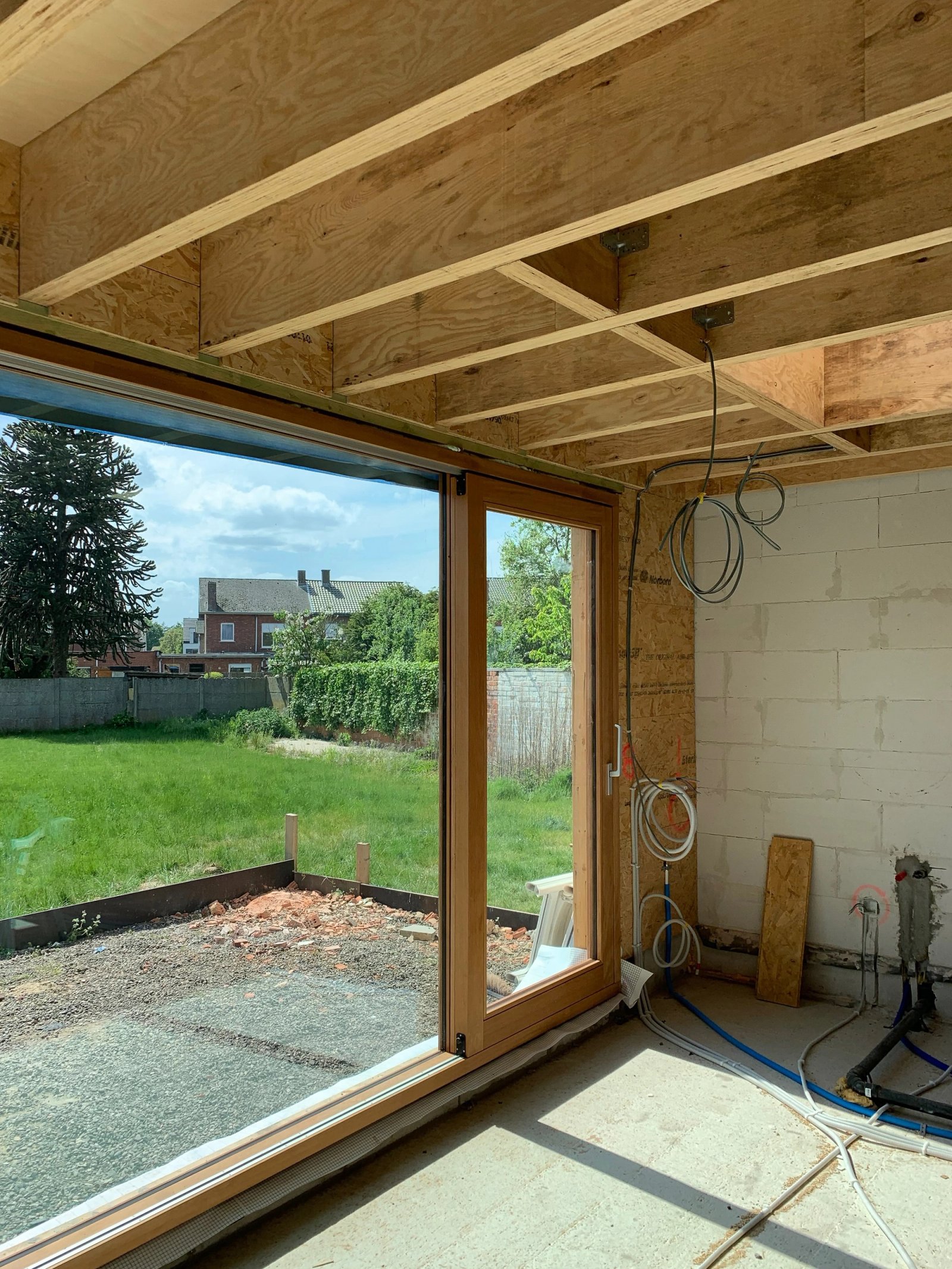
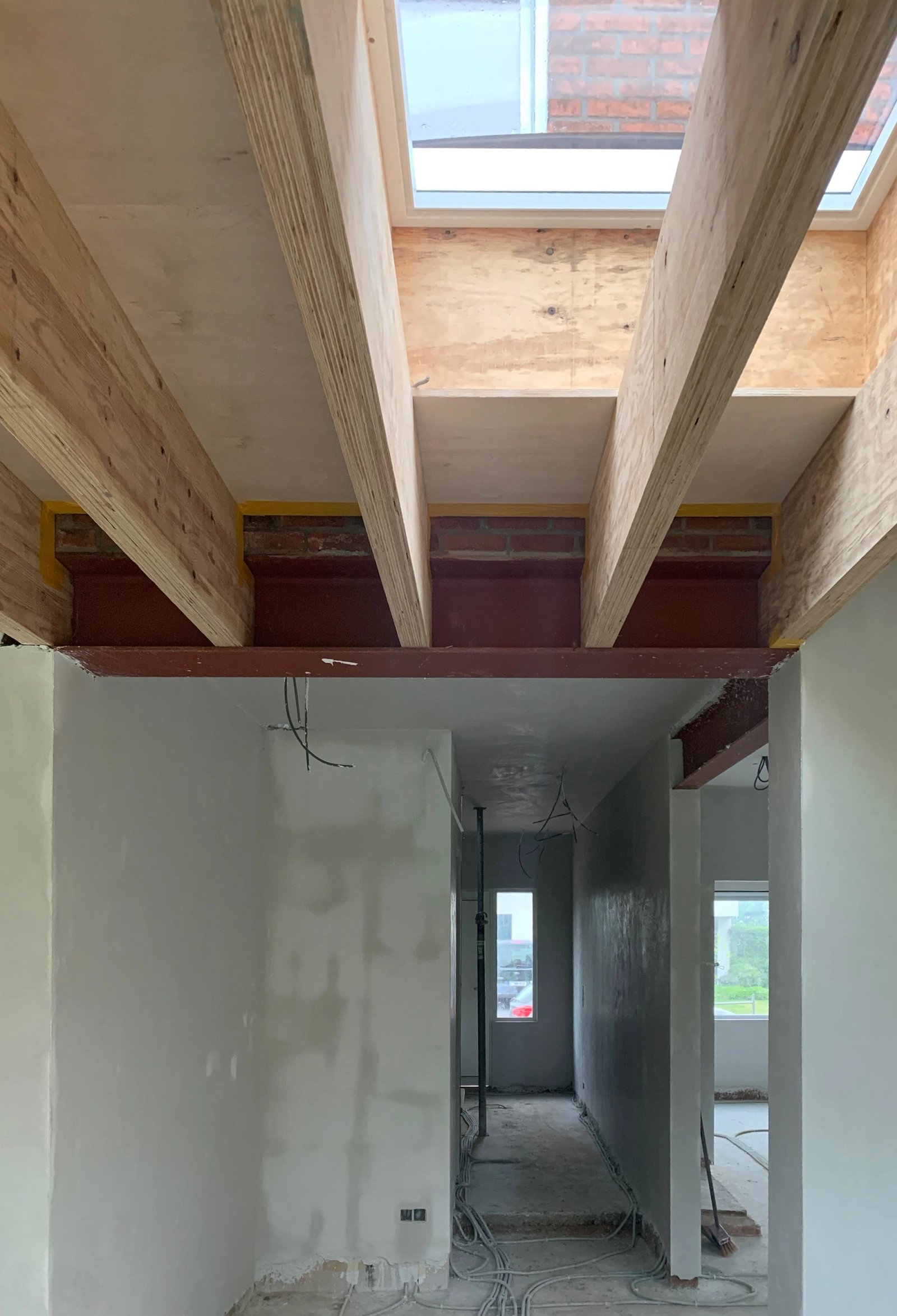
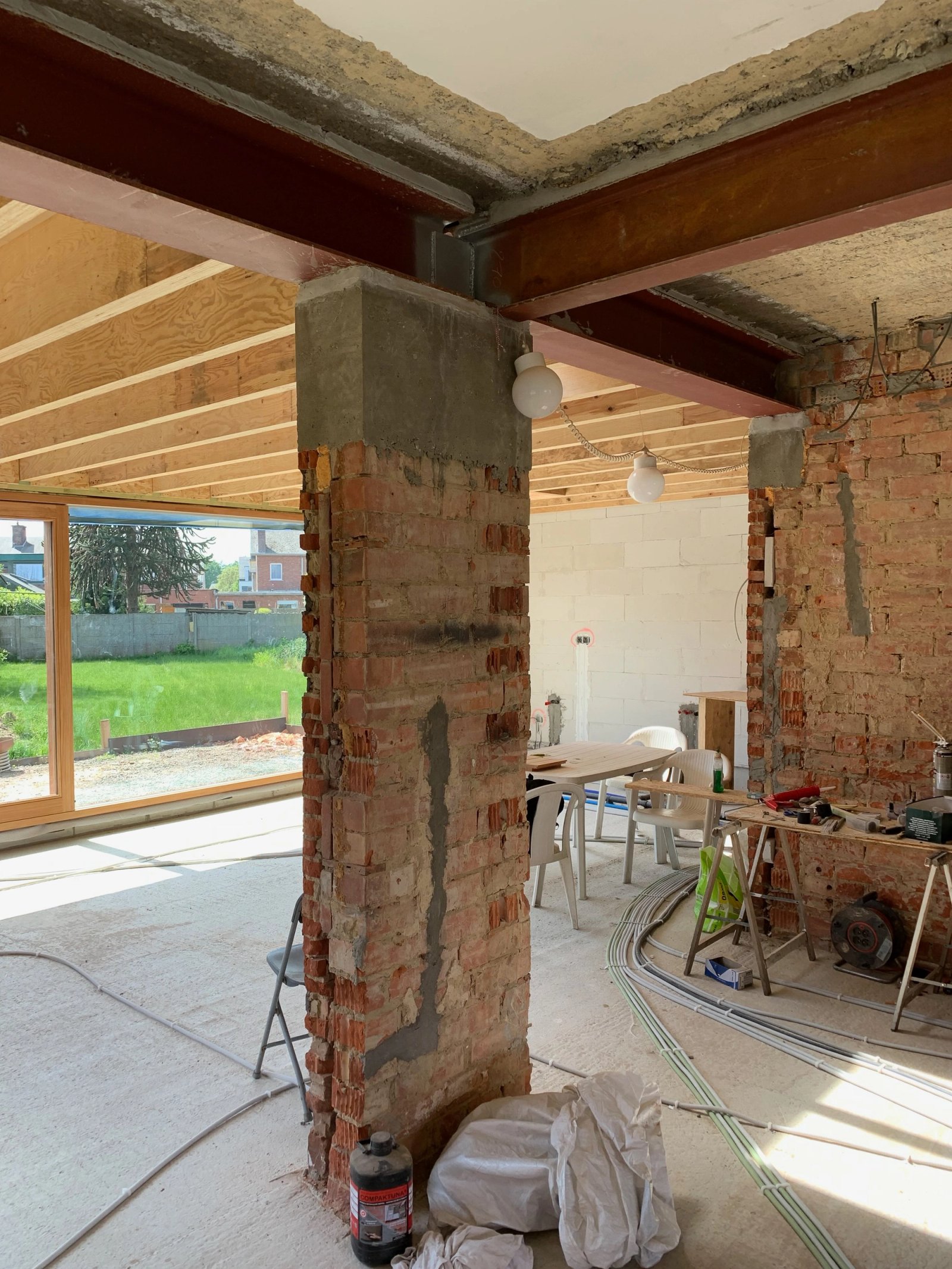
Seeking a construction method that would allow the client to take an active role in the building process, the extension was conceived as a timber-frame structure. Rather than concealing the characteristics of this technique, the design celebrates them. An exposed timber ceiling and visible structural beams form an integral part of the interior finish, lending warmth and a domestic character to the new space.
Carefully positioned windows and rooflights bring generous amounts of natural daylight deep into the extension and the existing house. Large sliding doors, combined with a continuous concrete floor extending from inside to outside, establish a seamless relationship with the garden.
Internally, the extension reorganises the layout of the house, creating a clearer spatial hierarchy and a more coherent flow between functions. The design balances openness with intimacy, establishing distinct zones and atmospheres within an open-plan arrangement. Each space is defined by its own purpose and character, contributing to a home that feels both spacious and comfortable.
Details