HORST
Info
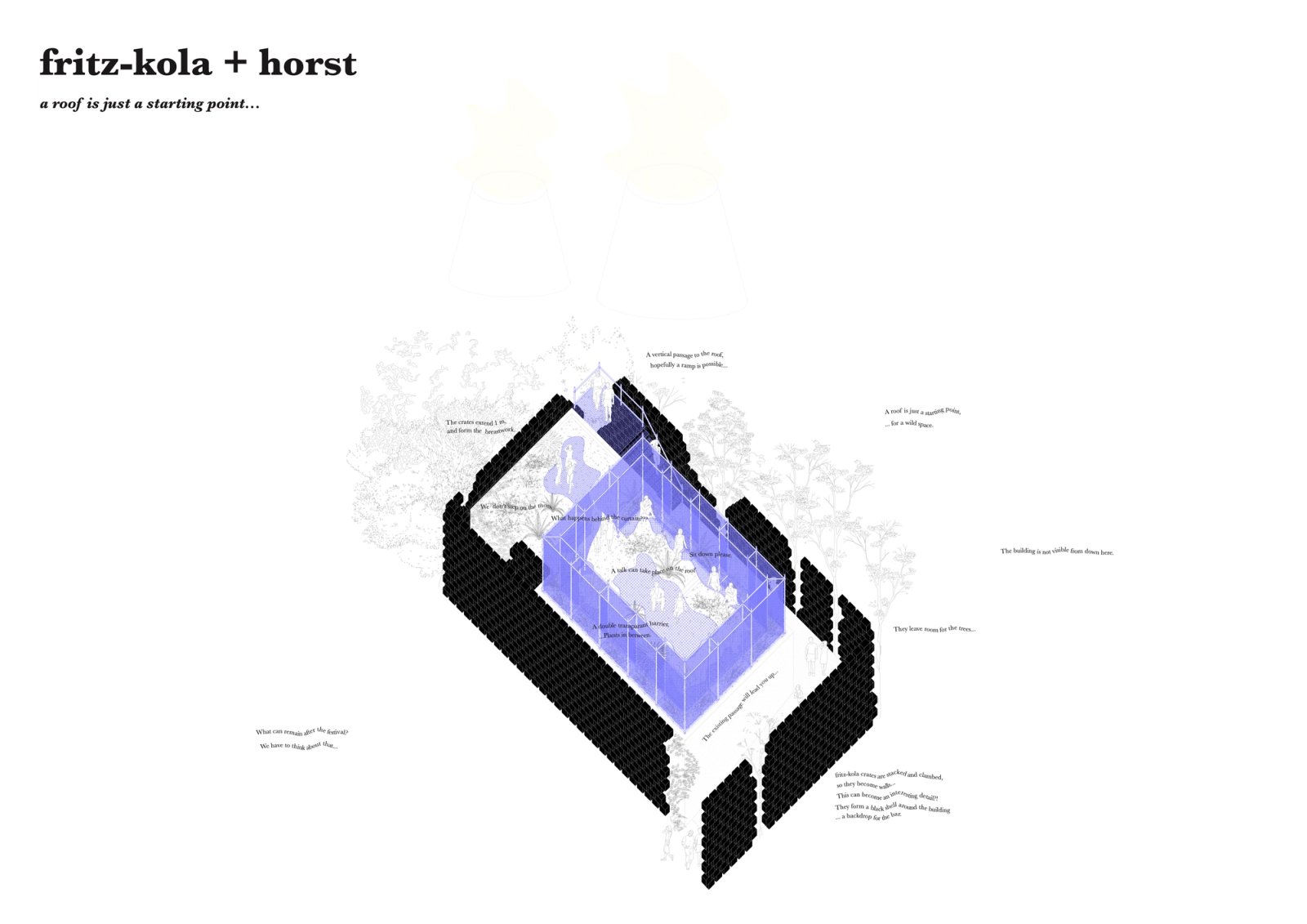
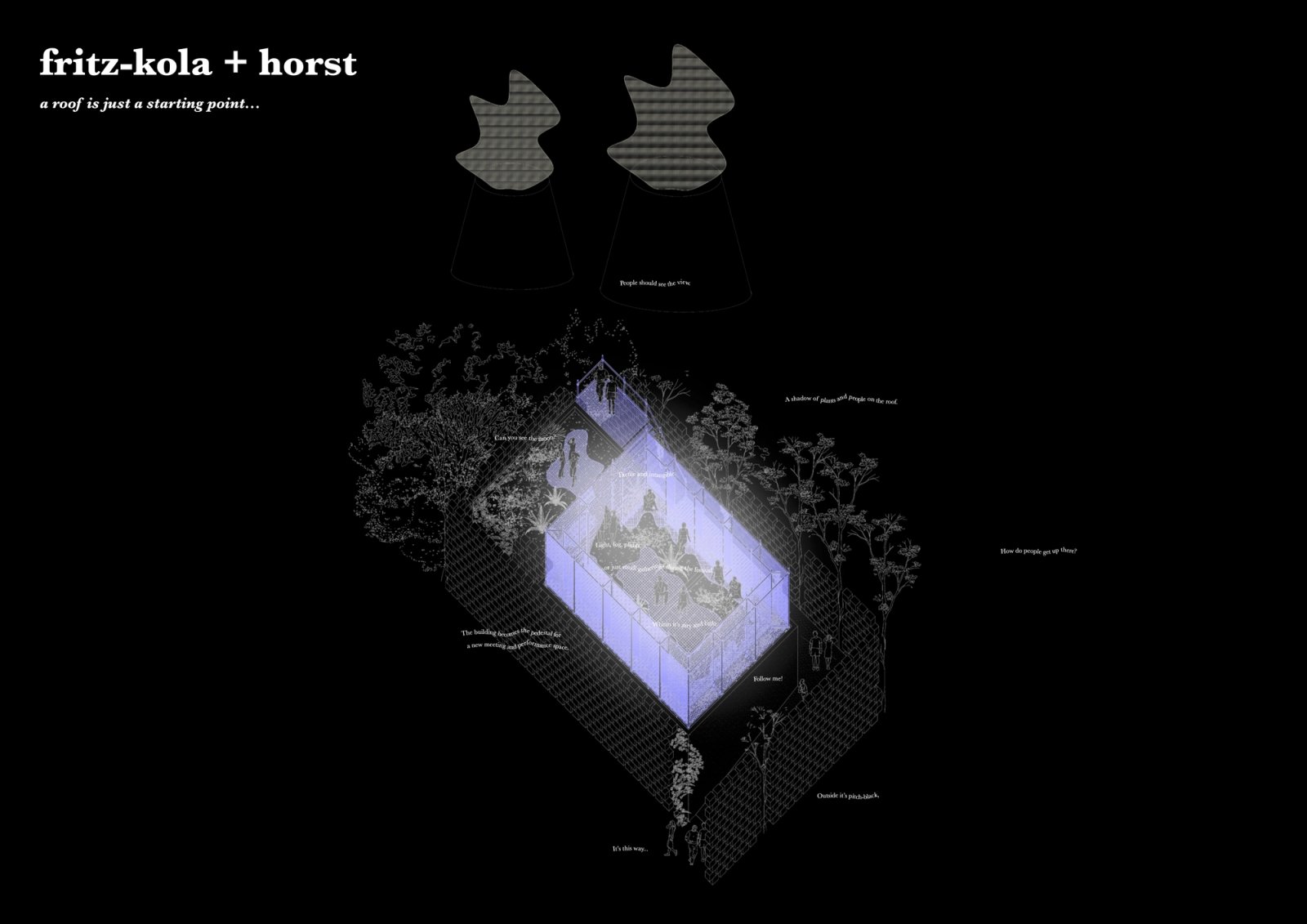
Commissioned through an open call by Fritz-Kola and Horst Arts & Music, this proposal explores how architecture can transform overlooked spaces into catalysts for social interaction, creativity, and collective experience. The competition challenged emerging designers to reimagine the rooftop of an existing building within Asiat Park as a publicly accessible destination that embodies sustainability, community, and innovation.
At the heart of the proposal is the ambition to create a meeting place where contrasts dissolve. Old and new, inside and outside, tactile and intangible, permanent and temporary merge into one another. Rather than prescribing a singular experience, the project embraces ambiguity as a design tool. Creating a place of productive uncertainty where unexpected encounters, performances, and new perspectives can emerge.
The design is defined by two radical yet complementary interventions. The first is a monumental black façade constructed from stacked Fritz-Kola crates. Acting simultaneously as architecture, material archive, and circular design statement, the intervention transforms a familiar object into a new spatial identity. The crate wall redefines the building’s presence within the park while demonstrating the potential of material reuse and alternative construction methods.
The second intervention takes place on the rooftop, where an intangible green landscape is introduced as a public meeting and performance space. Elevated above the park, this new rooftop environment offers a setting for gathering, reflection, and cultural exchange. The intervention blurs the boundary between architecture and landscape, creating a space that continuously changes through light, weather, vegetation, and occupation.
Together, these interventions establish a dynamic dialogue between the existing structure and its surroundings. Existing light conditions, views, and spatial qualities are captured, reframed, and amplified, revealing latent potentials within the site. What was once a forgotten remnant of the past is transformed into a vibrant social platform that contributes to the ongoing evolution of Asiat Park as a place for community, creativity, and experimentation.
By interpreting sustainability as both an environmental and social ambition, the project extends beyond the creation of a temporary installation. It proposes a framework for circular design, collective ownership, and community integration, demonstrating how architecture can activate underused spaces and foster meaningful connections between people, place, and culture.
Details